Cyclades
A detailed western Cyclades yacht charter route from Lavrion Main Port, with specific choices around Kea, Kythnos and Serifos. Compare Koundouros, Korissia, Vourkari, Otzias, Kolona, Merichas, Loutra and Livadi before fixing the week.
PASSAGE PROFILE
About 115–145 nautical miles for the week; several passages of 20–30 nautical miles
YACHT TYPE
Well-equipped cruising monohull or catamaran for an experienced skipper
A focused western Cyclades itinerary from Lavrion
A one-week charter from Lavrion should not try to collect distant islands. Kea, Kythnos and Serifos already provide exposed Aegean sailing, several distinct ports and enough alternatives to build a rewarding route. The plan below uses approximately 6 knots for timing, but the skipper must revise every leg for the actual yacht, Meltemi forecast, sea state and safe overnight choices.
Saturday — Lavrion to Sounion | about 6–8 nm
If the yacht is ready around 5 p.m. and the forecast is suitable, Cape Sounion gives a short first leg of roughly one to one-and-a-half hours. The Temple of Poseidon above the bay makes it an attractive opening night. It remains an exposed anchorage in some conditions, so staying in Lavrion is the correct alternative after a late handover or when the skipper is not satisfied. This route never depends on leaving the base on Saturday.
Sunday — Sounion to Kea | about 14–22 nm
Kea has several viable first destinations, and they are not interchangeable. Koundouros on the southwest coast can create a shorter, swimming-focused arrival. Korissia is the main ferry port and offers practical access ashore. Vourkari is the more attractive yachting village for dinner and an evening walk. Otzias lies farther north and may suit a different wind pattern. Choose one arrival point rather than circling the island to fit them all into a single day.
Monday — Kea to Kythnos | about 18–26 nm
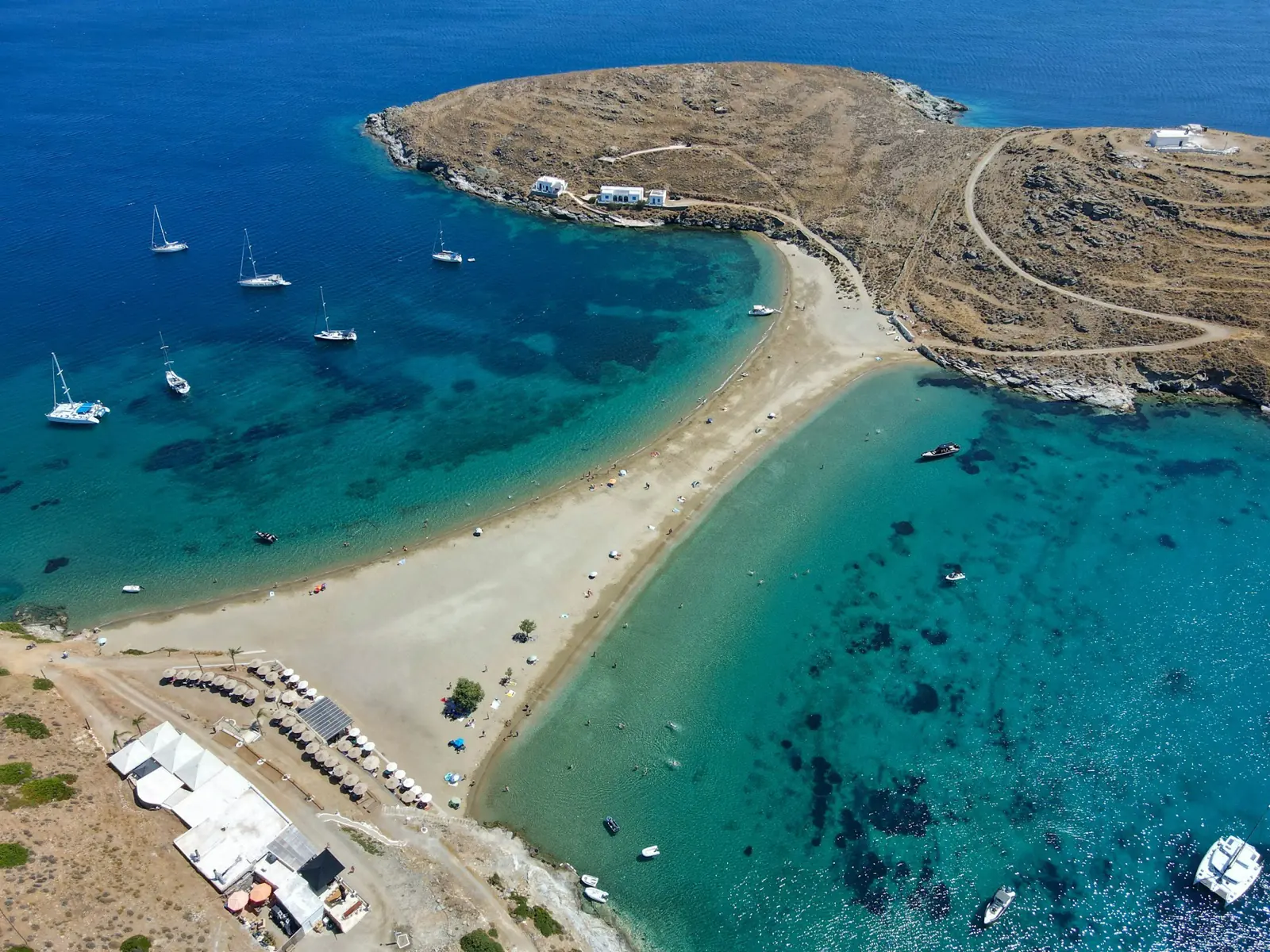
Use the morning to reach Kythnos, then select the lunch and overnight combination according to wind. Kolona is the famous double-sided beach and a compelling daytime stop, but it is on the west side and may not suit every approach. Merichas is the island’s main port and the practical choice for provisions and ferry connections. Loutra, on the northeast coast, offers a different route and access to the thermal-spring village. Do not promise both Kolona and Loutra on the same day without checking the extra distance.
Tuesday — Kythnos to Serifos | about 20–26 nm
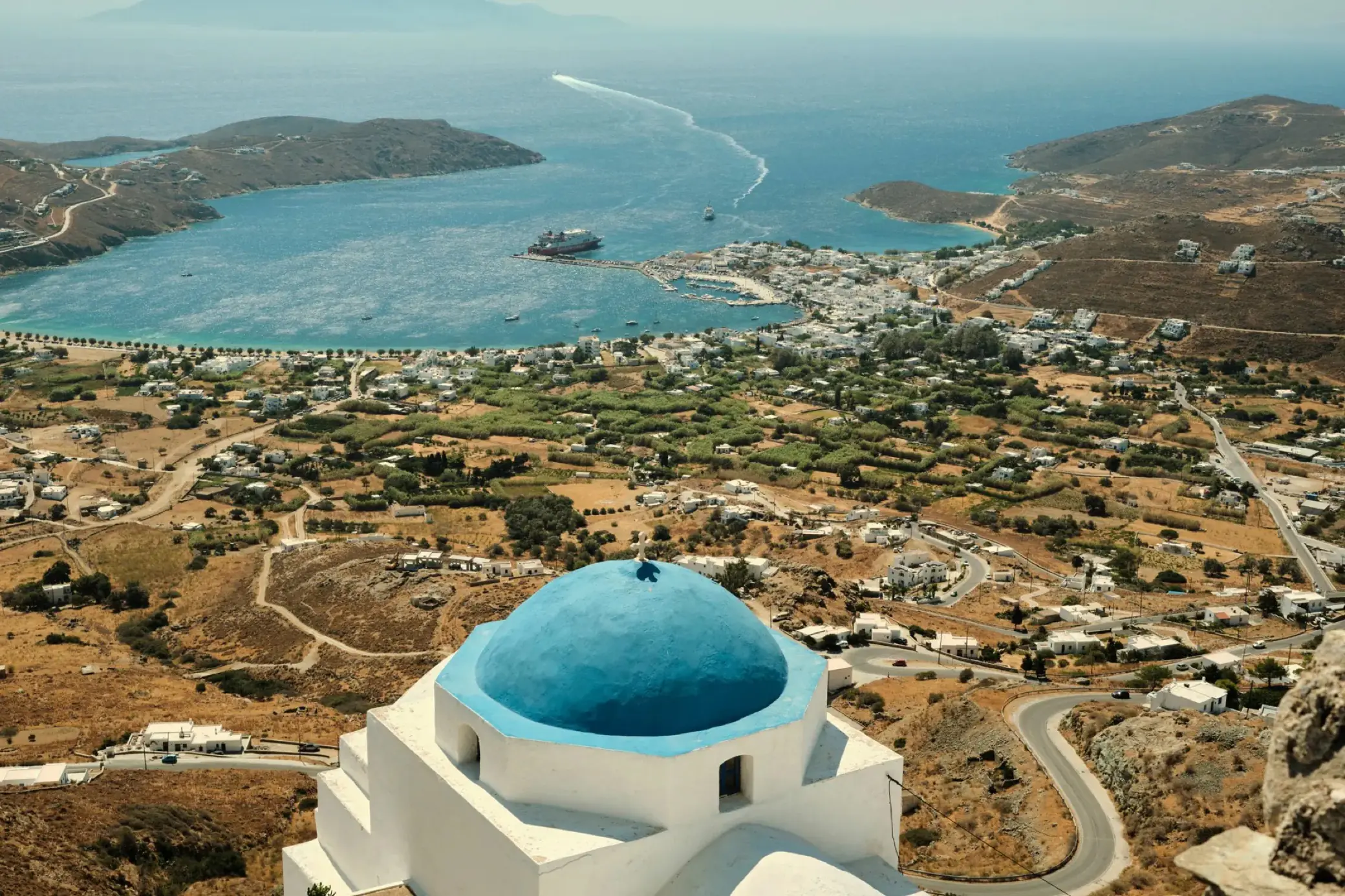
Make the inter-island passage early. On Serifos, Livadi is the main overnight port and the access point for the hilltop Chora. Before entering, a lunch stop may be possible at Koutalas, Vagia, Kalo Ampeli or another bay chosen for the wind. Each lies on a different part of the island, so the correct one depends on the approach. If the weather is unsettled or the crew is tiring, arrive directly in Livadi and use the extra time ashore.
Wednesday — Explore Serifos, then return toward Kythnos | about 18–26 nm
This day should add depth rather than another island. Visit Chora in the morning, then consider a north- or south-coast anchorage such as Sykamia, Koutalas or Vagia before starting back toward Kythnos. Finish at Merichas, Kolona or another suitable Kythnos anchorage. The choice determines Thursday’s route, so make it before the afternoon breeze strengthens—not after arriving at a crowded bay.
Thursday — Kythnos to Kea | about 18–24 nm
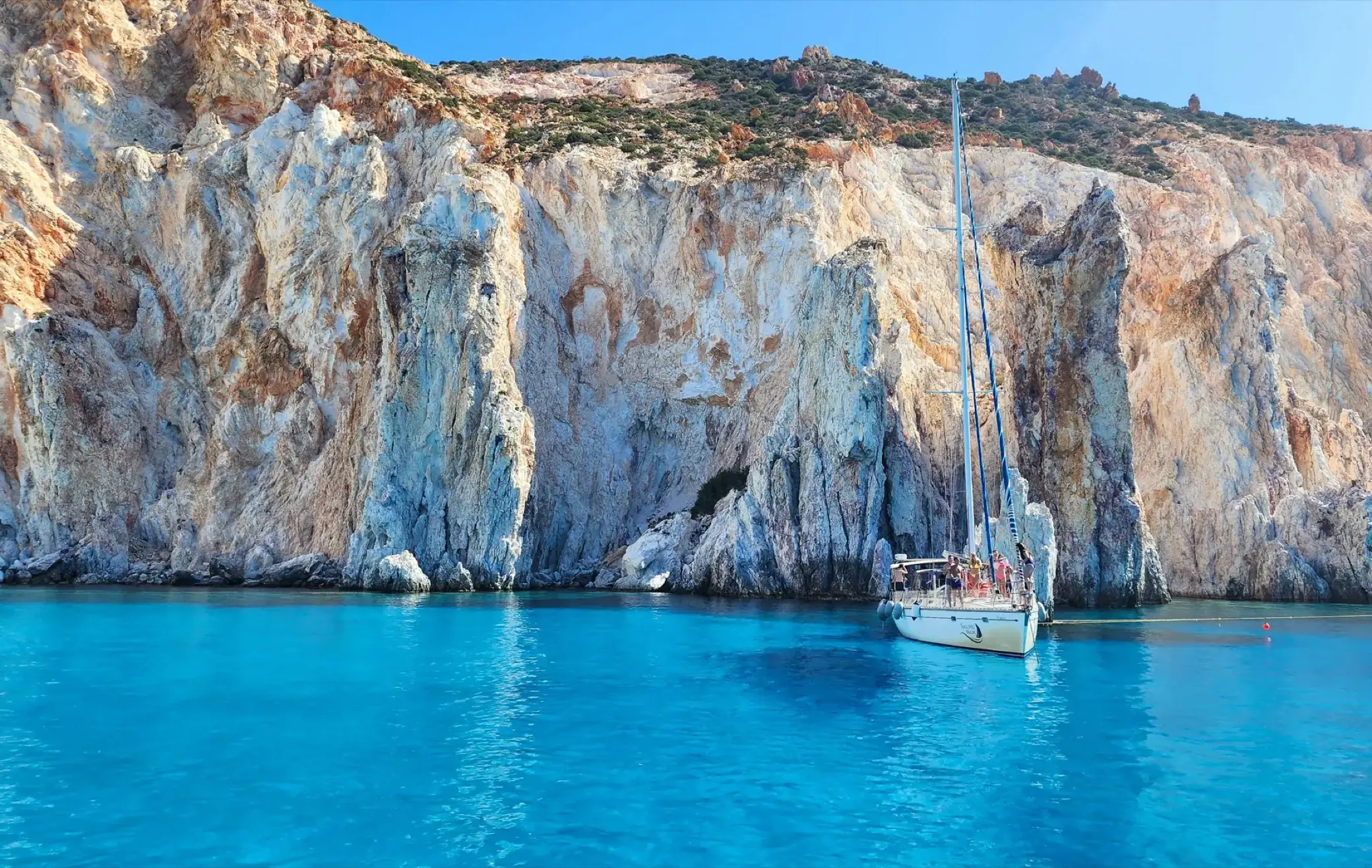
Return to Kea using a different side of the island from Sunday where conditions allow. Koundouros can work for a final swim-focused night, while Korissia or Vourkari give easier access ashore. Poles Bay by ancient Karthea is a rewarding daytime possibility for a crew that values archaeology and a more remote setting, but it should be chosen only with suitable weather and current pilotage. End the day where Friday’s return to Lavrion remains straightforward.
Friday — Kea to Lavrion before 5 p.m. | about 14–22 nm
Cross back early enough to retain a weather margin. A short lunch stop near Sounion may fit when the sea state and timing are favourable; otherwise continue directly to Lavrion. Allow time for fuel and the operator’s return checks, then spend Friday night aboard at the home port if permitted. The Friday crossing should never be the first time the crew considers the stronger wind forecast.
Kea ports and anchorages: which stop should you choose?
Kea deserves more than a single generic stop. The island’s shape means that a good choice in one wind direction may be inconvenient in another, and each place creates a different kind of day.
Koundouros
A southwest-coast bay useful for a beach and swimming-focused stop. It can shorten the first crossing from Sounion, but it does not provide the same village evening as Vourkari. Treat it as a route tool, not automatically the best Kea destination.
Korissia
Kea’s main ferry port is practical for shops, transport and a straightforward night ashore. Ferry movements and harbour activity are part of the trade-off. It suits groups prioritising logistics over a quieter anchorage.
Vourkari
The northwestern yachting village is the strongest choice for waterfront dining and atmosphere. Summer popularity can make space uncertain, so Korissia, Otzias or another approved option should remain in the plan.
Otzias
A broad northern bay that can support a beach-oriented stop and a different passage onward. Its suitability depends heavily on the wind and the exact anchoring area, which must be checked using current information.
Poles Bay and ancient Karthea
This remote east-coast stop is for crews willing to trade town facilities for landscape and access to the archaeological site. It is not a casual substitute for a port and should be attempted only when conditions, anchoring confidence and the day’s timing all support it.
Kythnos and Serifos alternatives
On Kythnos, compare photogenic Kolona with practical Merichas and the different routing offered by Loutra. On Serifos, use Livadi for the town and Chora, while Koutalas, Vagia, Kalo Ampeli or Sykamia can provide a daytime contrast. A strong northerly forecast may require dropping Serifos entirely and building a more conservative Kea–Kythnos week.
Questions to resolve before booking
Use these points to decide whether the route matches the crew’s experience, comfort and priorities.
Why does this route omit Mykonos and Paros?
They can be included in faster or more ambitious plans, but doing so usually creates longer passages and less recovery margin. Kea, Kythnos and Serifos better match a relaxed one-week rhythm.
Can the two-hour blocks always be maintained?
No. They are planning targets. Wind direction, sea state and safe harbour choices may require a longer continuous passage or a shorter day.
Who should skipper this route?
The operator must approve the skipper. Experience in stronger winds, open-water passages and Mediterranean mooring is particularly important in the Cyclades.
What is the main compromise?
A compact western loop sacrifices island count, but provides more time at anchor and a safer return buffer when the Meltemi affects the plan.
Tell us your dates, group and route priorities. A Seeksail adviser will review your request and help identify suitable yachts, normally within one business day.
Request My Yacht Shortlist