Split
A detailed one-week Croatia yacht charter route from Marina Baotić near Trogir, comparing Maslinica, Šešula, Hvar, the Pakleni Islands and Brač. Vis is treated as a weather- and crew-dependent extension rather than a compulsory box to tick.

PASSAGE PROFILE
About 85–105 nautical miles without Vis; approximately 120–140 with the Vis extension
YACHT TYPE
Cruising catamaran or monohull matched to group and skipper
A realistic Dalmatian sailing week from Trogir
This route begins and ends at Marina Baotić in Seget Donji, the common charter base just outside Trogir. It is designed around a normal Saturday handover, moderate daily passages and enough time to distinguish the islands rather than rush through them. Distances are approximate and should be recalculated for the actual yacht, forecast, harbour availability and any operator navigation restrictions.
Saturday — Marina Baotić to Maslinica or Šešula, Šolta | about 9–11 nm
With an on-time handover, the west end of Šolta is reachable in roughly one-and-a-half to two hours at 6 knots. Maslinica is the village and marina choice, with stone houses and an easy evening ashore. Šešula is the neighbouring inlet for a quieter bay experience and restaurant moorings where currently available. Do not assume a buoy is free because you intend to dine ashore: arrangements and charges change. If the briefing finishes late, remain at Marina Baotić and begin on Sunday.
Sunday — West Šolta to Stari Grad or Vrboska, Hvar | about 20–27 nm
Sail south of Šolta and use a suitable bay on the north or west side of Hvar for lunch before choosing the overnight. Stari Grad has the strongest historic-town experience and a deep natural harbour. Vrboska is smaller, with bridges, stone waterfronts and access to nearby bays. Jelsa is another possibility when space and conditions suit. A group wanting shorter sailing can stay around Šolta and Brač instead; there is no need to reach Hvar on the first full day.
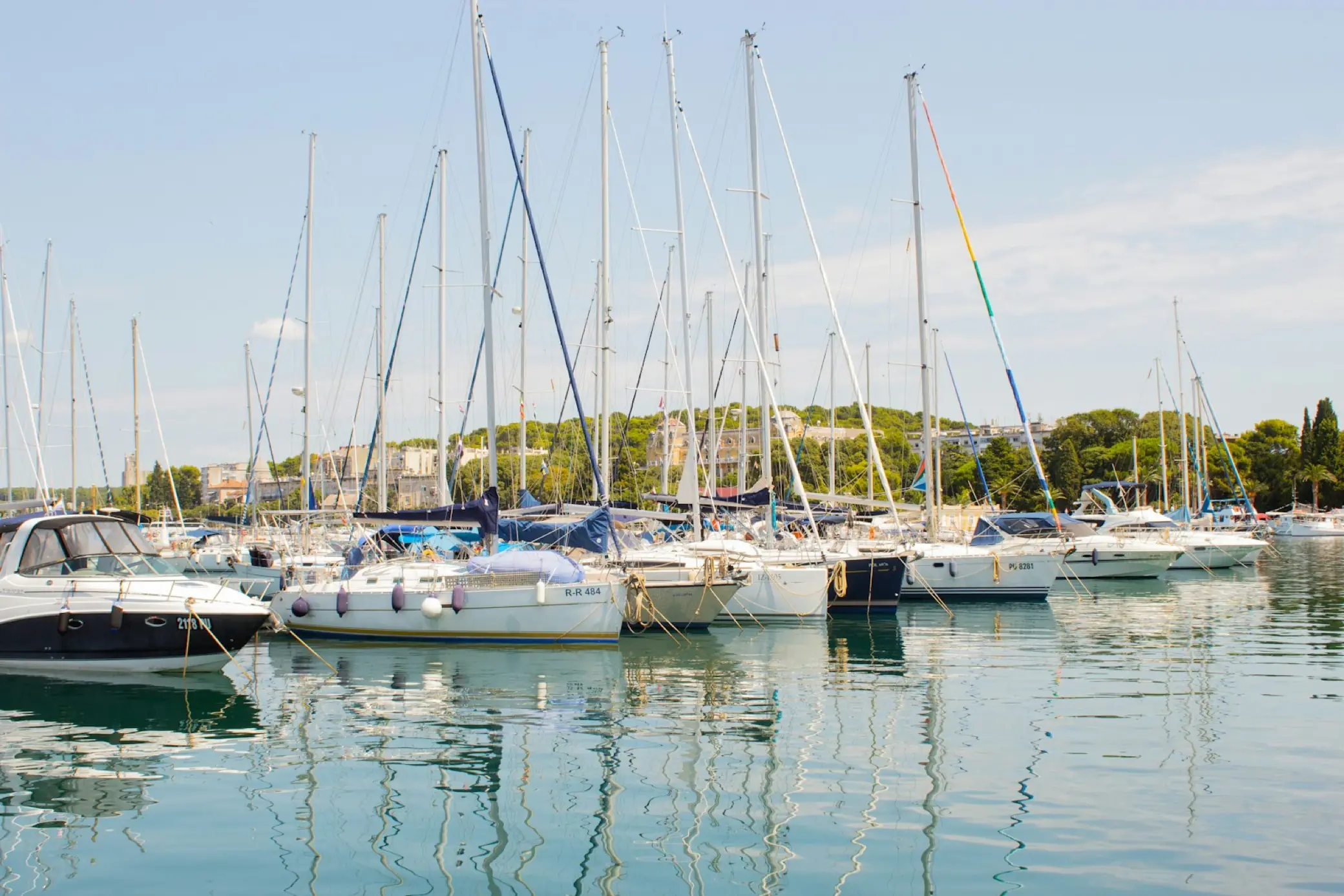
Monday — Hvar coast and the Pakleni Islands | about 12–20 nm
Use the day to compare Hvar Town with the Pakleni Islands rather than forcing both into one mooring plan. Hvar Town offers the busiest evening, but berthing is limited and exposed to heavy traffic. ACI Palmižana on Sveti Klement is the operational alternative for visiting Hvar by water taxi. Vinogradišće and other Pakleni bays can suit swimming or lunch when wind, anchoring rules and crowding allow. Stari Grad remains the calmer alternative for groups that do not need Hvar nightlife.
Tuesday — Optional Vis extension, or a slower Hvar day | about 20–30 nm
Vis should be decided from the forecast and crew appetite, not included automatically. From the Hvar or Pakleni area, Vis Town is the more direct arrival; Komiža lies on the island’s western side and normally requires a longer, more exposed route. If the extension does not suit, explore the south coast of Hvar, Šćedro or an approved bay before returning toward Stari Grad or Vrboska. This keeps the week enjoyable even when the offshore leg is removed.
Wednesday — Vis or Hvar to Milna, Brač | about 18–32 nm
From Hvar, the passage to Milna is a moderate inter-island leg. From Vis it becomes one of the longest days and needs an early start. Milna has several berthing options around its long inlet and a waterfront village with useful services. Bobovišća is a quieter alternative on western Brač when the group prefers a small settlement and the current mooring situation is suitable. Choose the overnight before committing to a long lunch stop.
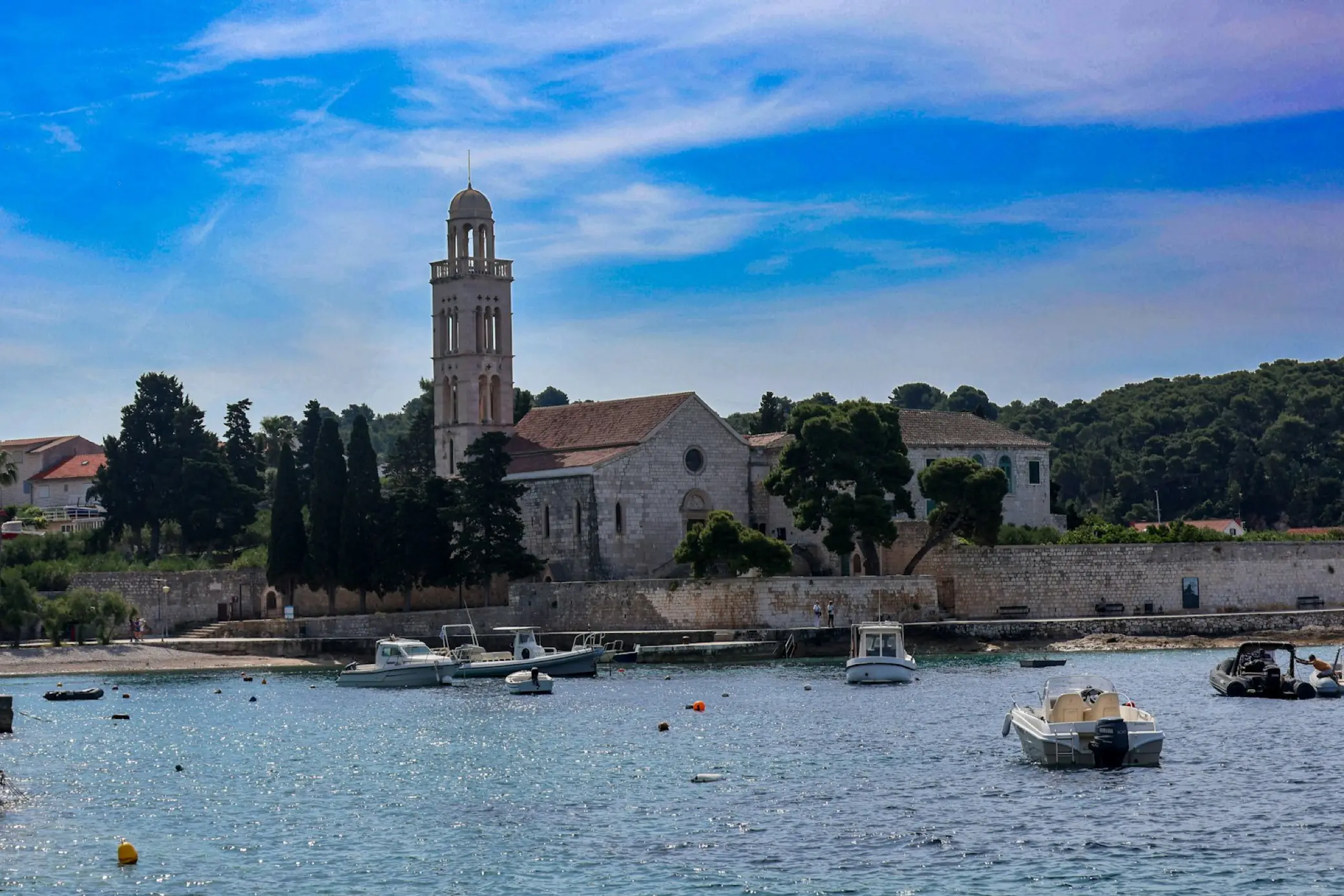
Thursday — Brač to Stomorska or Nečujam, Šolta | about 12–20 nm
Cross back to Šolta and make this the route’s recovery day. Stomorska provides a compact harbour village and an evening ashore. Nečujam offers a broad bay and a popular swimming area; the submerged wreck often visited by snorkellers should be approached only with local knowledge and normal caution. Other south-coast bays such as Tatinja can work in suitable weather. Finish where Friday’s return to Trogir remains short.
Friday — Šolta to Marina Baotić before 5 p.m. | about 10–18 nm
Leave enough time for fuel, congestion around Trogir and the operator’s hand-back procedure. The islets west of Maslinica or a Čiovo bay may provide a final swim if conditions and timing allow. Return to Marina Baotić before the contractual deadline and spend Friday night aboard when permitted. If the yacht is returning from Vis or eastern Hvar, Thursday must be used as a positioning day rather than leaving a long recovery passage for Friday.
Which Croatian ports and anchorages should you choose?
Central Dalmatia offers many places with similar distances but very different evenings. The most useful itinerary explains which experience each stop provides.
Maslinica versus Šešula
Maslinica is the better village and marina stop. Šešula is the quieter adjacent inlet, often chosen for swimming and restaurant-linked moorings. They are close enough that most crews should select one overnight rather than count them as separate destinations.
Stari Grad, Vrboska and Hvar Town
Stari Grad combines history, restaurants and a naturally deep harbour. Vrboska is smaller and more intimate. Hvar Town has the highest demand and liveliest atmosphere, with the Pakleni Islands providing the practical alternative for leaving the yacht outside the centre.
Palmižana and the Pakleni bays
Palmižana is the marina choice and a base for reaching Hvar Town. Vinogradišće and other bays are for swimming, lunch or an overnight only when current conditions and anchoring rules permit. Do not treat the entire archipelago as one interchangeable anchorage.
Vis Town versus Komiža
Vis Town is normally the more direct approach from Hvar. Komiža delivers a distinct fishing-town setting on the west coast but adds distance and exposure. Include Komiža only when the forecast, yacht and crew justify sailing around the island.
Milna and Bobovišća on Brač
Milna is the service and marina hub. Bobovišća is the quieter village alternative. Both position the yacht well for Šolta and Trogir, so the decision can be made around the desired evening rather than route efficiency alone.
When to remove Vis
Remove Vis when the crew is inexperienced, anyone dislikes longer open-water passages, the forecast is unsettled or the group wants more time ashore. A complete Šolta–Hvar–Brač loop remains a strong one-week charter. Vis adds range and a memorable island, but it also consumes the route’s weather margin.
Questions to resolve before booking
Use these questions to decide whether the route and yacht suit the people actually travelling.
Is Vis essential on a one-week Croatia charter?
No. Vis adds variety but also a longer passage. A compact Šolta, Brač and Hvar route may be more comfortable for children, first-time crews or a mixed group.
Should we start from Trogir, Split or Agana?
The best base depends on flight logistics, yacht choice and the route priorities. Compare the actual operator base rather than assuming all Split-area departures are interchangeable.
Can we reserve every overnight stop in advance?
Policies vary by marina, harbour and operator. Some stops may require booking while others depend on arrival and conditions. Confirm the current process before departure.
What is the main trade-off?
Adding famous islands can mean longer sailing days and busier evenings. A calmer route usually requires accepting fewer headline stops.
Tell us your dates, group and route priorities. A Seeksail adviser will review your request and help identify suitable yachts, normally within one business day.
Request My Yacht Shortlist